Live stories. Every single day.

Oh, you're here again, my friend. Have a seat and enjoy a good read.

We're still building the site — thanks for being here early.

Tech Glitches

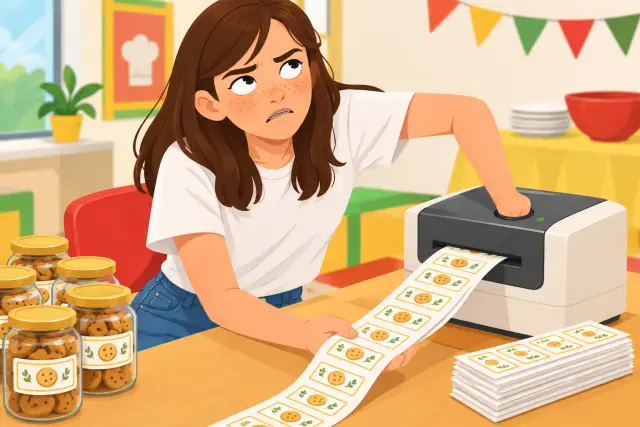
Paloma was feeding tape into the label printer when the app changed the number of copies to ten all by itself. She was standing at a table in the cooking club room, preparing labels for six jars of biscuits. Severyn, who ran the club, was setting out plates ahead of the parents' arrival. Paloma wanted to show him she could do more than just bake something—she could make the presentation look tidy, too. So she had borrowed his little label maker. Handwriting didn’t feel quite grand enough for biscuits she’d spent half the morning baking.

She had just changed the counter on the screen back to one and printed “Oat.” The label came out neatly, so Paloma decided to add the ingredients and a friendly “Enjoy!” But due to a glitch, every edit secretly reset the copy count back to ten. Busy perfecting the layout, she didn’t notice and tapped Print. The printer cheerfully produced ten identical long labels. Paloma stacked the extras beside her phone. Severyn had just cleared the middle of the table for her, and now she particularly wanted to put something there that looked better than a jar bearing a single, brief word.

For the next jar, she added a border, the ingredients, and a separate line about homemade butter. The counter jumped back to ten after her edit, but she had already tapped Print. A long stream of tape spilled over the edge of the table. Paloma caught it with both hands, rolled her eyes, and pressed the power button with her elbow. The printer finally stopped. She could have just picked up a pen, but Severyn had already placed the first labeled jar in front of the plates. She wanted the rest to match—just without a surplus of labels fit for an entire bakery.

Paloma found the reset button underneath the device and held it until the light blinked. The glitch was gone: the printer was finally producing one label at a time again. Unfortunately, the factory defaults also restored the smallest font size. With the parents already walking in, she simply shrugged, quickly printed all six names over again, and stuck them onto the jars.

She swept the spare labels into the trash bin, moved the jars right to the edge of the table so the tiny text could be read up close, and popped open the lids. At least the biscuits themselves were still a normal size.
0 1

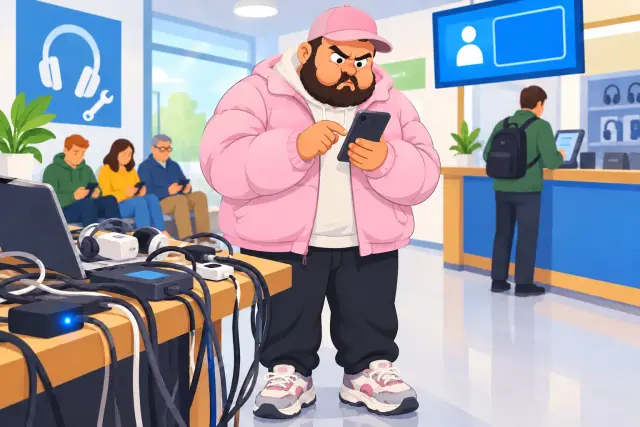
Max was tapping “Get a Ticket” on his phone when the app started adding him to the queue over and over. He was at a repair centre to drop off his headphones. Three customers sat along the wall, and the current ticket number glowed above the counter. Max wanted to register on his phone rather than wait at the ticket machine behind a man searching for his glasses. A little circle kept spinning on the app, so Max tapped the button a few more times. He disliked waiting even when signing up to wait.

When the circle finally disappeared, eight consecutive numbers appeared under “My Tickets.” The app had processed every tap but displayed the results all at once. Max opened the first ticket: only two people ahead of him. That would have been excellent if his other seven tickets weren’t taking up places behind him. The display now showed a queue of ten customers. The man at the machine found his glasses, looked at the number, and slowly sat down without even taking a ticket.

Max decided to keep his first number and cancel the extras. Each had a “Leave Queue” button, but tapping it opened a compulsory questionnaire: a reason for leaving and a comment of at least twenty characters. “Your app registered me eight times” was not an option. Max selected “Other” and typed an explanation. After he confirmed, the phone returned him to the home screen. To cancel the second ticket, he had to reopen the section, find the number, and fill out the same questionnaire. By the third, he had copied his comment.

While the display called the two actual customers, Max stood there cancelling his remaining extra tickets, pasting his explanation into each form. By the final confirmation, his thumb was ready for a break. One ticket remained, and its number lit up above the counter. Max walked over, set his headphones in front of the employee, and locked his phone. He had avoided the queue at the ticket machine. Granted, it had required seven written explanations of why he wouldn’t be standing in a queue.

0 6

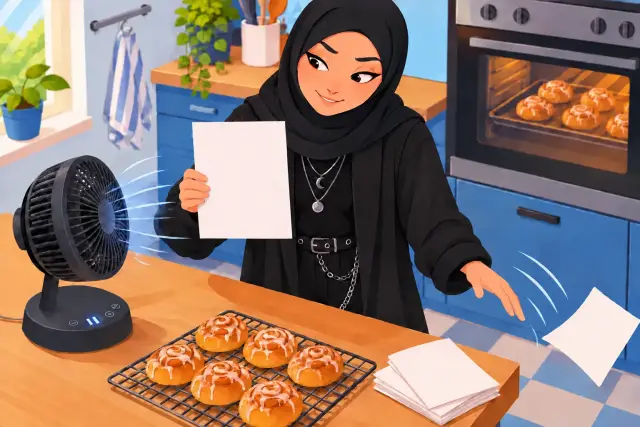
Lucía was standing in the kitchen beside the hot oven, waiting for her buns to finish baking. A cooling rack and a stack of paper napkins were ready on the table, alongside her new gesture-controlled fan. To keep the napkins from blowing around the kitchen, Lucía had pressed the button to set the fan to its lowest speed—she just wanted a gentle breeze.

Holding a printed recipe in front of her to check the baking time, she began absentmindedly fanning herself with it. Suddenly, the fan began to hum louder and blow harder.

Lucía stopped fanning herself and leaned in to look at the display: two speed bars were glowing instead of one. Assuming she had accidentally bumped the button with the edge of the paper, she reached over to set the recipe down. The sheet swept past the sensor again, pushing the fan to its third speed. A gust of air sent the top napkin sliding off the table. Lucía quickly pinned the rest down with the recipe paper, crossing the sensor yet again. The fan shut off completely. The kitchen fell quiet, and the heat rushed back with suspicious speed.

Lucía placed the recipe safely out of reach and finally noticed the sticker on the fan’s base: “Wave for next speed.” It turned out she had been asking for cool air far more insistently than she realized! To test her theory, she swept her palm past the sensor. The fan turned on at low speed. Another wave, and it sped up. She turned the fan sideways so she wouldn’t issue any more accidental commands, gathered the napkins from the floor, and just then heard the oven beep. The buns were a perfect golden brown; now she just had to wait until they were cool enough to touch without testing her pain tolerance.

After transferring the buns to the cooling rack, Lucía placed them in front of the fan and safely stowed the napkins in a drawer. With a few quick waves, she cycled back to a gentle breeze. A few minutes later, after glazing the first bun, she reached for the power button but stopped—her fingers were covered in sticky glaze. Smiling to herself, she simply passed the back of her hand over the sensor to boost the airflow and moved the rest of the buns closer. Gesture control was staying on; after a baking session, the buttons usually needed cleaning anyway.

0 8
Sponsored

Paweł enabled the “Quiet Streets” mode on his phone specifically to avoid squeezing through the morning crowd near the town market. He was just trying to reach a nearby café for a peaceful pre-work coffee, and his navigator assured him the side lane on the right was completely clear.

The lane was indeed empty—until the corner. Beyond it stretched long tables filled with local cheeses: a Saturday tasting event was underway, which the app’s weekday satellite map didn't account for. Tapping “Avoid busy area,” Paweł followed a new arrow into an adjacent aisle, where a vendor immediately offered him a piece of brined cheese on a toothpick. Arguing with cheese on an empty stomach seemed like unnecessary work.

The next aisle turned out to be the bakery section. Trying to dodge a tray of poppy-seed rolls, Paweł asked his phone for another detour. The new arrow led him deeper into the market, straight into a free serving of warm fruit punch. With pastry in one hand and a paper cup in the other, Paweł could no longer tap the screen. He surrendered and finished his drink at the edge of the table.

From there, he finally spotted his café’s front door. Nobody was waiting outside: every potential customer was busy sampling pastries in the market.

Paweł walked into the quiet café and ordered an espresso. While the barista prepared his drink, he opened the saved route. He decided not to delete it—without his phone's error, he would have taken the main street and missed a free breakfast.

He renamed the route “Saturday Samples” and added a note: “Do not edit. Arrive hungry.” For next Saturday, he set an alarm to leave twenty minutes earlier so he would have enough time to taste everything.

0 6

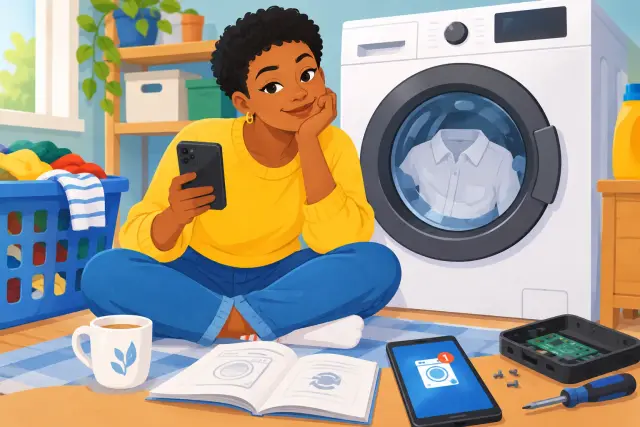
The smart washing machine locked Zainab’s favorite shirt inside its drum and kept extending the wash indefinitely, constantly finding excuses for extra cycles.

On Saturday morning, Zainab loaded the laundry, selected a thirty-minute quick cycle in the mobile app, and went to the kitchen for tea. When the display reached one minute, she returned to collect her clothes. Right in front of her, the timer suddenly reset to seven minutes—the intelligent sensor had decided the fabric wasn’t clean enough yet.

Seven minutes later, the drum stopped, but the latch didn’t click. A notification popped up on her phone: “Optimizing cycle. Determining moisture level.” Zainab tapped “End Cycle,” but the app threw an error and asked her to check the door. Her shirt lay behind the glass looking perfectly clean, but totally unreachable. Zainab opened the manual and performed a forced restart.

The machine drained the water and unlocked the door. But the moment Zainab reached for the handle, the lock clicked shut again. Over Wi-Fi, the app detected an “unfinished cycle” and automatically resumed the wash without waiting for her input. The drum began filling with water once more.

Zainab decided to take drastic action. She walked into the hallway, unplugged the Wi-Fi router, and cut the power to the machine. Deprived of its internet connection and electricity, the appliance finally surrendered. A minute later, the emergency latch released. Zainab opened the door, held a bowl under the trickling water, and pulled out her spotless shirt.

After hanging her clothes, she deleted the app and plugged the machine back in—but left the router off. Deprived of its smart network, the machine quietly displayed zero minutes. Zainab retrieved her cold tea from the kitchen and shut the bathroom door.

0 22