
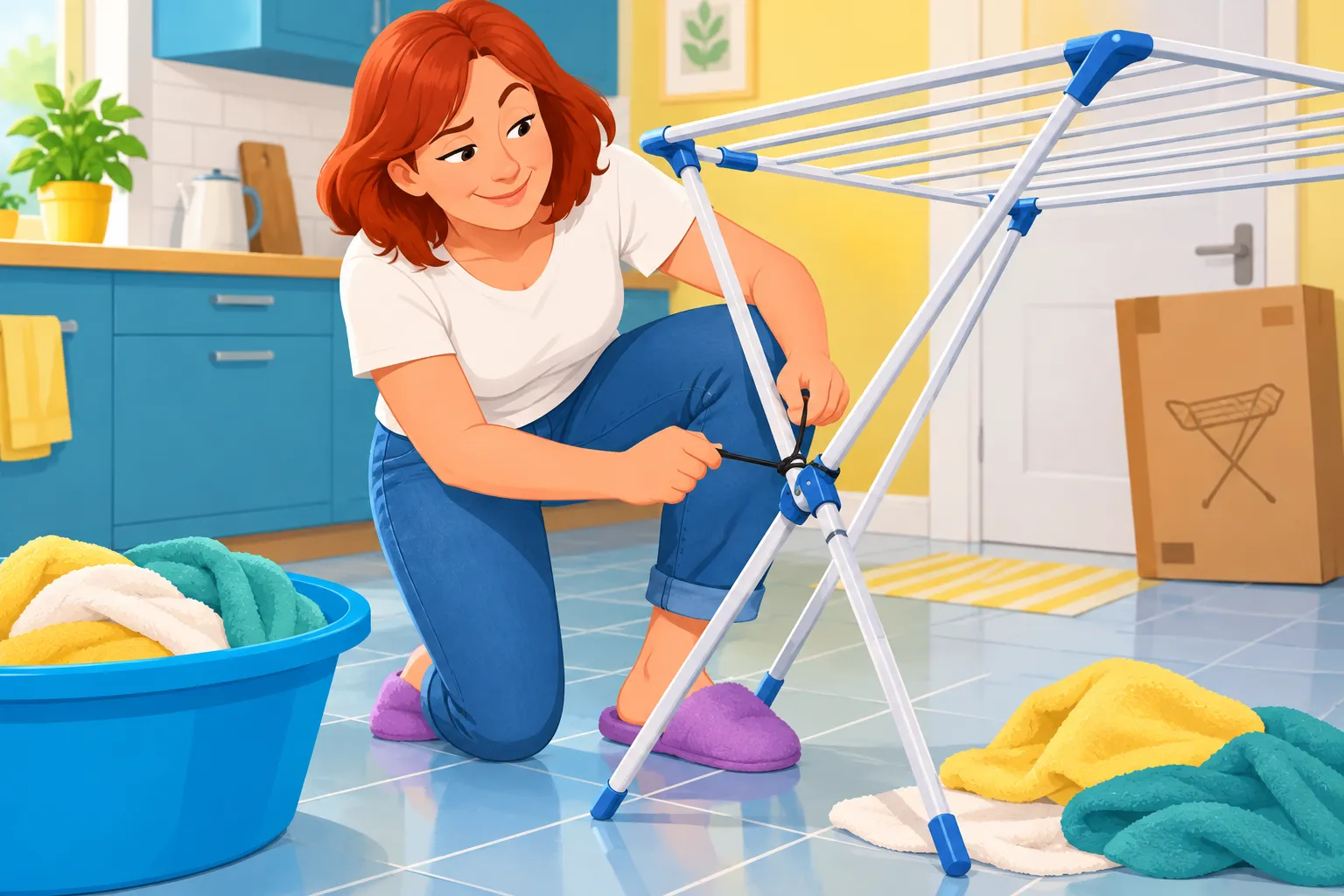
Olena set up her new freestanding drying rack in the middle of the kitchen and brought over a basin of washed towels.
She wanted to hang everything up quickly so she could enjoy her tea in peace. Her store review was going to be brief: “Unfolds, stands, thank you.” She even placed the cardboard packaging by the door to carry out right after her tea.
The first towel went onto the rails smoothly. Under the second, however, the plastic catch popped out of its slot, the legs collapsed, and the rack neatly deposited both towels onto the floor. Olena picked them up, spread the legs again, and forced the latch shut. As a test, she hung up one small hand towel—the structure held. She typed a line into her draft review: “Suitable for small loads.” But as soon as she added a heavy bath towel, the rack collapsed again, forcing her to delete the draft along with the wet patch on the tiles.
Hating the hassle of packing it up for a return, Olena decided to resolve the engineering flaw herself. Retrieving two heavy-duty cable ties from the kitchen drawer, she bound the leg joints tightly shut. Now the catch could pop out all it wanted; the frame was rock-solid. She hung all the towels and wet socks without an issue, updating her review: “After a minor adjustment, handles full loads effortlessly.”
When the laundry dried, Olena tried to fold the rack away, but the cable ties dutifully held firm. Cutting them meant restoring its automatic floor-depositing feature.
Shrugging, she simply carried the fully open rack into her shower cubicle. Now, before her evening shower, she moves it into the hallway, then parks it back over the drain afterward.
She opened the app and published her final review: “Three stars. Holds laundry well. Requires temporary evacuation when the owner needs to wash.”
Comments