

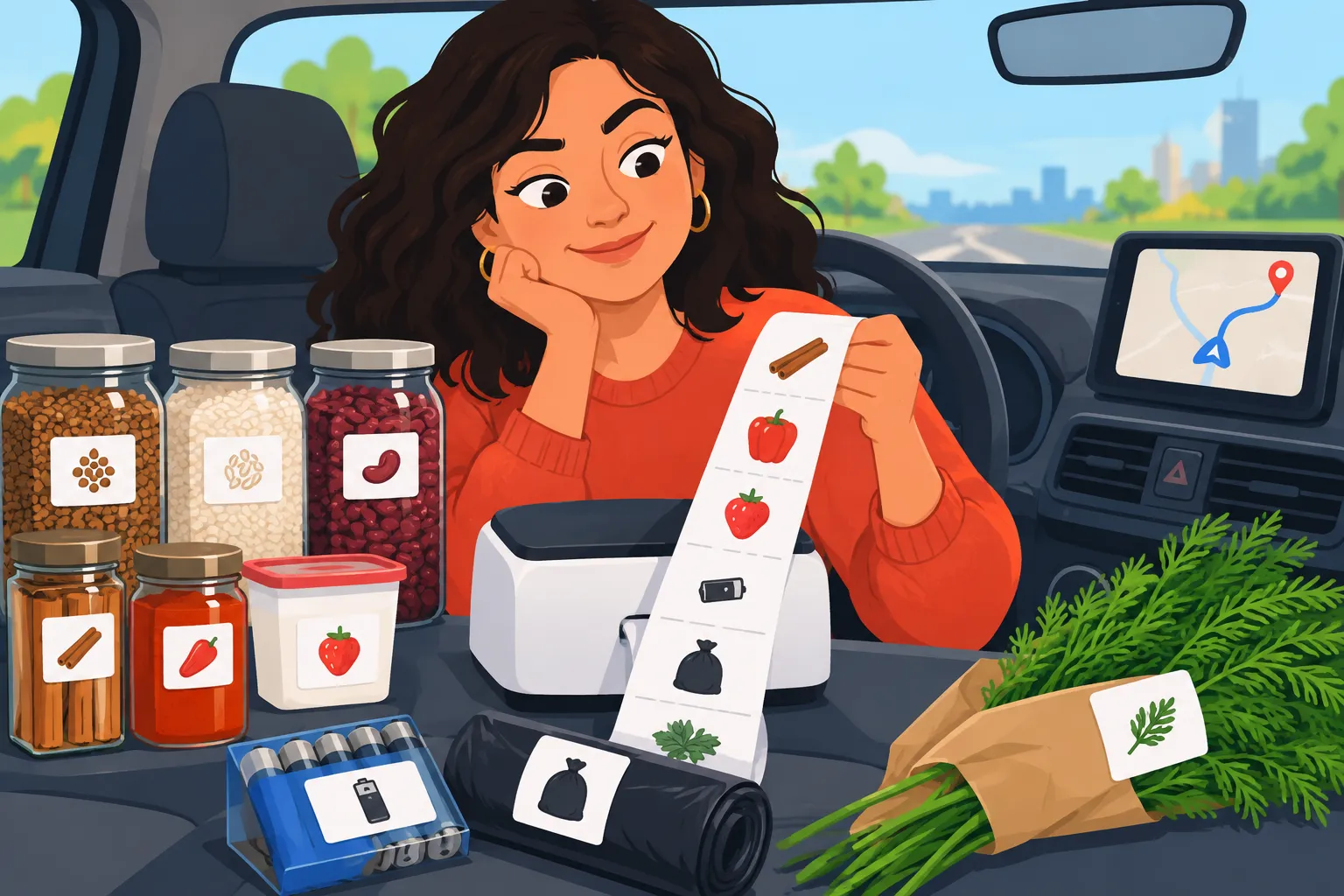
One time, Solomiia decided to impress the cooking club organizer with a perfectly organized kitchen and got so carried away with a smart label printer that it began printing the names of everything she had ever bought. Marta was due in an hour, and the jars of buckwheat, rice, and beans already stood in tidy rows. That would have been enough for a normal person, but Solomiia tapped “Sync with shopping cart” because she wanted to look like someone who kept even cinnamon under supervision.
The printer obediently produced “Cinnamon,” then “Paprika,” and then remembered three years of shopping history. Out came “Strawberry yogurt,” “AA batteries,” “Trash bags, 35 liters,” and “Dill, one bunch.” Solomiia canceled the job in the app, but the printer had already downloaded the list and continued on its own. The labels were perfectly good, and throwing them away felt wasteful, so she began sticking them onto the appropriate things.
Twenty minutes later, the batteries were labeled, the trash bags were labeled, and one lonely “Dill” sticker was waiting for an item that did not exist in the apartment. When Marta arrived to bake a cake for the club meeting, Solomiia was still catching the strip of labels at the edge of the table. Marta asked for baking paper, and Solomiia found it immediately in the bottom drawer thanks to a label generated from a purchase two years earlier. The scale, vanilla, and spare spatula appeared just as quickly.
The cake made it to the meeting on time, and Marta asked Solomiia to help organize the club cupboard next time. That evening, Solomiia turned off syncing but kept the printer in the kitchen. She loaded a fresh roll, printed “Keys,” and stuck it onto a small bowl by the door. For the first time in a month, the keys actually ended up there — the equipment finally lived up to her expectations.
Comments